Aerospace engineering · University of Florida

Engineering for the
edge of possibility.

I'm an aerospace engineering master's student focused on launch vehicles, trajectory optimization, aerodynamics, and computational analysis.

SCROLL TO EXPLORE

01 — Profile

Turning complex physics into
clear engineering decisions.

I work across the boundary of analysis and design—using computation to understand trade spaces, test assumptions, and make aerospace systems perform.

M.S.Aerospace Engineering
University of Florida

02 — Selected work

Built from first principles.

Focused studies spanning vehicle design, atmospheric flight, numerical methods, and probabilistic modeling.

0134.08°

Optimal Control · Entry Dynamics

Reusable vehicle crossrange

An LGR collocation solution for maximizing crossrange during constrained reusable launch vehicle entry.

Project briefing
02−75%

Finite Elements · Verification

Thermal & structural FEA

A mesh, symmetry, dimensionality, and element-order study across heat conduction and structural loading.

Project briefing
03MARS

Mission Design · Systems Engineering

Cosmic Coven Mars mission

A complete robotic Mars architecture spanning transfer design, aerobraking, orbital science, EDL, and spacecraft structures.

Project briefing
04−17%

Experimental Aerodynamics · XFOIL

Leading-edge icing wind tunnel

A clean-versus-rime-ice study of lift, drag, and stall on a 3D-printed NACA 65(2)-415 airfoil.

Project briefing
05R² .926

V&V · Uncertainty Quantification

Bayesian model verification

A data-driven comparison of drag models with Bayesian calibration and posterior predictive validation.

Project briefing
Also in the archive

Two-stage rocket design · Kriging analysis

Case study 01 — Mission design

Cosmic Coven:
a complete Mars mission architecture.

As a primary technical contributor, I developed the interplanetary transfer, Mars aerobraking and orbital strategy, and critical spacecraft structures for a multi-vehicle robotic survey mission.

Team systems design · University of Florida
MISSION OVERVIEW / 01:30PLAY PRESENTATION ↑
My technical focusTrajectory · Aerobraking · Structures
Transfer5.9 km/s

minimum modeled ΔV

Transit≈250 days

Earth-to-Mars transfer

Aerobraking180 days

to polar science orbit

Fatigue life10,508

cycles vs. 400 required

01

Interplanetary transfer

Built a MATLAB departure-arrival trade space and porkchop plot for the 2028–2029 window, identifying an approximately 250-day minimum-energy transfer.

02

Aerobraking & orbit

Defined the highly elliptical capture and 180-day aerobraking campaign leading to a 400 km polar science orbit with greater than 75% surface coverage.

03

Spacecraft structures

Sized the solar-array boom for peak atmospheric drag, then evaluated bending, shear, fatigue life, and fracture tolerance across the aerobraking campaign.

Case study 02 — Optimal control

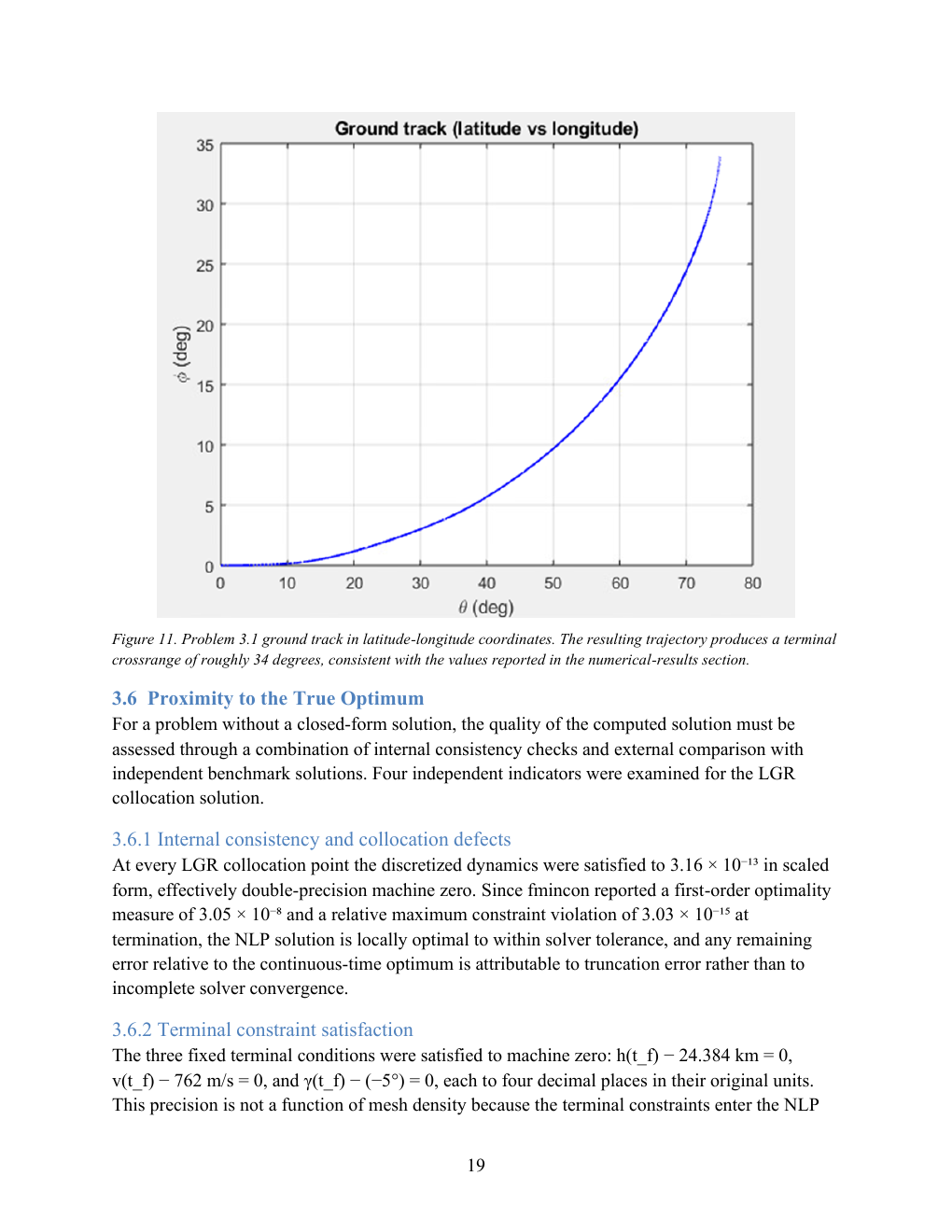
Maximizing crossrange through atmospheric entry.

I transcribed a nonlinear reusable-launch-vehicle entry problem with single-mesh Legendre-Gauss-Radau collocation, then solved the resulting constrained nonlinear program in MATLAB.

Outcome34.0811°

terminal crossrange

Validation−0.243%

relative to GPOPS-II

Model247

decision variables

  • Six-state nonlinear entry dynamics
  • Free final time with terminal constraints
  • Independent RK4 re-integration
  • Physical bounds to avoid local minima
Ground track from the reusable launch vehicle crossrange optimization report
FIG / 11 Optimized latitude-longitude ground track

Case study 03 — Finite elements

Testing when a simpler model is still the right model.

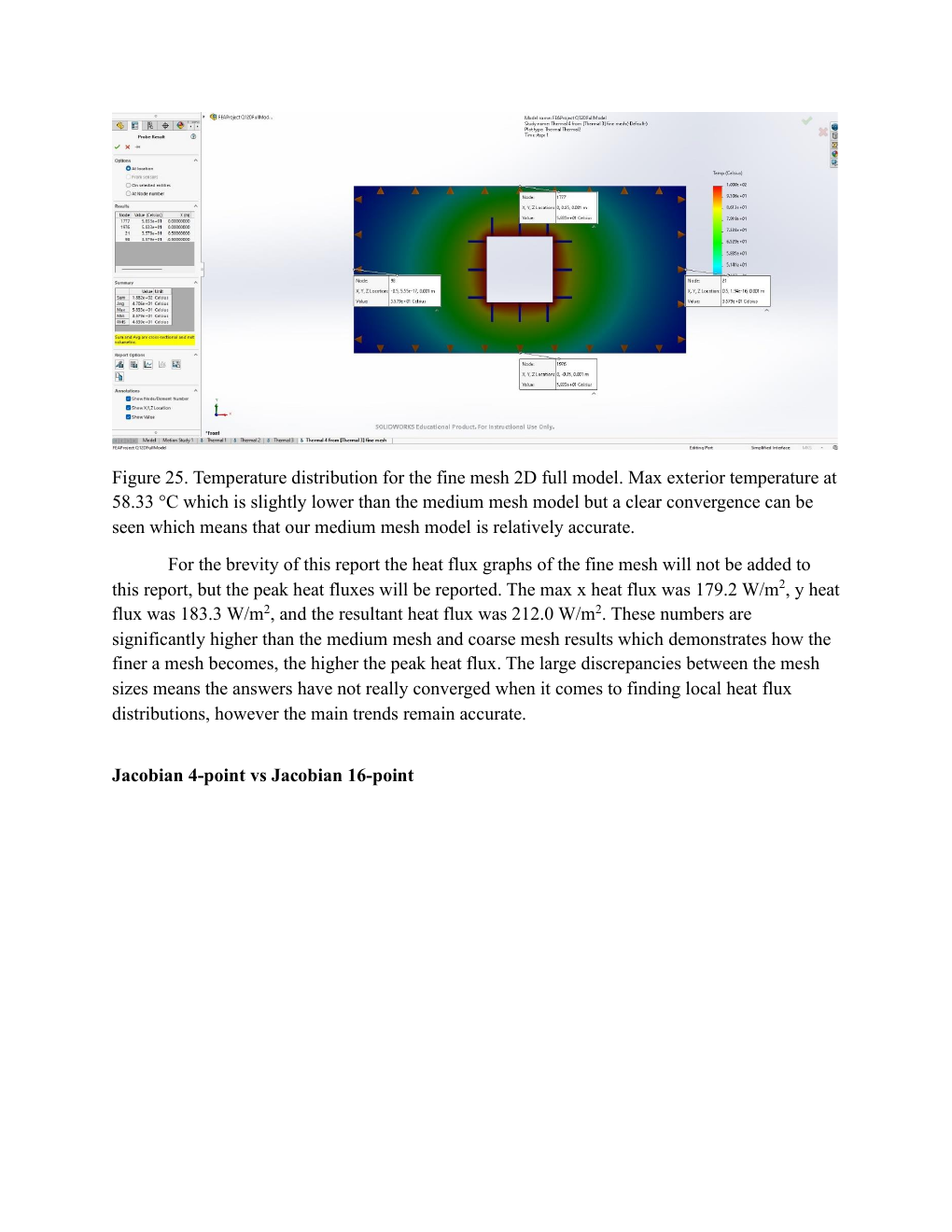
I compared full, symmetry-reduced, 2D, and 3D finite-element models for steady-state conduction and structural compression, isolating the effects of mesh density, element order, and boundary conditions.

Reduction75%

via quarter symmetry

Thermal58.33°C

converged exterior peak

Structural35.33 MPa

quarter-model peak stress

  • Thermal and linear-elastic studies
  • Coarse-to-fine mesh convergence
  • Linear vs. quadratic tetrahedra
  • Plane-stress validity assessment
Fine-mesh thermal finite element temperature distribution from the project report
FIG / 25 Fine-mesh temperature distribution

Case study 04 — Experimental aerodynamics

Measuring how leading-edge ice changes stall.

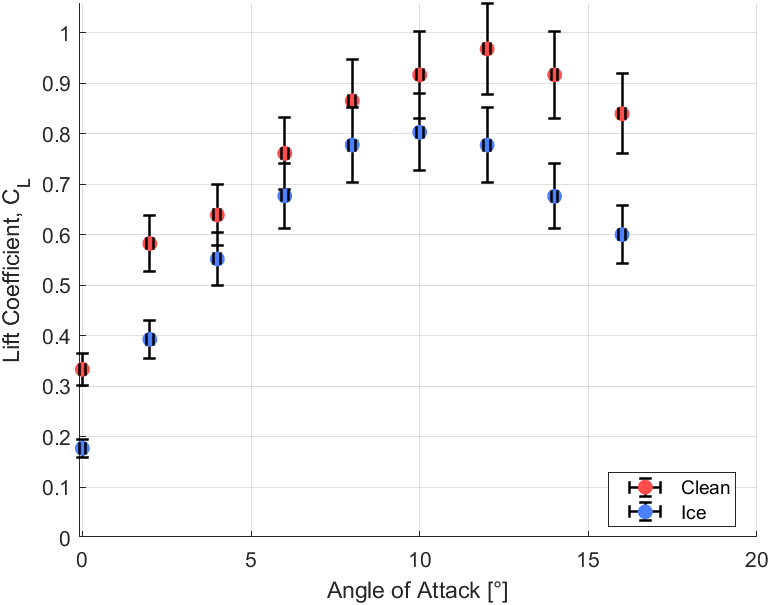
I helped design, fabricate, and test a 3D-printed NACA 65(2)-415 airfoil, comparing the clean configuration with simulated rime ice in a calibrated wind-tunnel experiment and against an XFOIL baseline.

Max lift−17%

0.968 clean to 0.803 iced

Max drag+16%

0.474 clean to 0.551 iced

Stall2° earlier

12° clean to 10° iced

  • Reynolds number ≈198,000
  • Calibrated lift and drag measurements
  • 0°–16° angle-of-attack sweep
  • Monte Carlo and RSS uncertainty analysis
Measured lift coefficient for the clean and simulated-rime-ice airfoil configurations
EXPERIMENT Clean and iced lift response with uncertainty

Case study 05 — V&V and uncertainty

Calibrating a drag model—and testing whether it predicts.

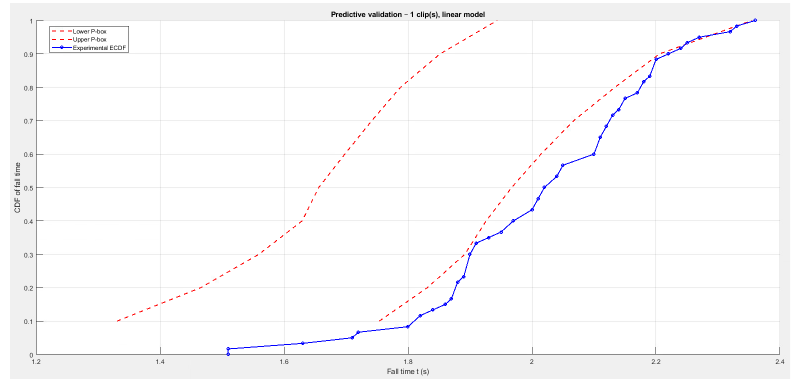
I used experimental paper-helicopter drop data to select a physics model, quantify aleatory and epistemic uncertainty, calibrate its drag coefficient, and test out-of-sample predictive performance.

Model fitR² 0.926

linear drag model

Calibration50,000

posterior samples

Prediction0.0049

3-clip area metric

  • Linear vs. quadratic drag selection
  • Bayesian parameter calibration
  • 95% posterior predictive P-boxes
  • ECDF discrepancy area metrics
Posterior predictive probability box compared with the experimental fall-time distribution
PREDICTION P-box bounds and experimental ECDF

03 — Resume

Engineering depth,
grounded in computation.

Download resume
Education

M.S. Aerospace Engineering

University of Florida · Expected December 2026

3.95 / 4.00 GPACertificates in Scientific Computing and Control Systems
Foundation

B.S. Aerospace Engineering

University of Florida · 2025

Computer Science minorNational Merit Scholar · Dean's List
Technical toolkit
Code

Python · MATLAB · C++

Analysis

Abaqus · SolidWorks · LabVIEW

Focus

FEA · Optimal control · V&V / UQ

04 — Capabilities

01Flight dynamics
02Aerodynamics
03Optimization
04Finite element analysis
05Uncertainty quantification
06Scientific computing